


Checking the clutch pedal adjustment
2. With the clutch pedal in the resting position, using a measuring tape, measure the distance from the center of the pedal pad to the base of the steering wheel frame (maximum distance from pedal). Mark the measurement as (A).
3. Fully depress the clutch pedal and repeat the procedure given in step 2. Mark the measurement as (B).
4. Subtract measurement (A) from measurement (B) to obtain the clutch pedal travel. Compare this with the data in the Specifications at the beginning of this Section.
Text copied from an online resource [Opelbook.ru]
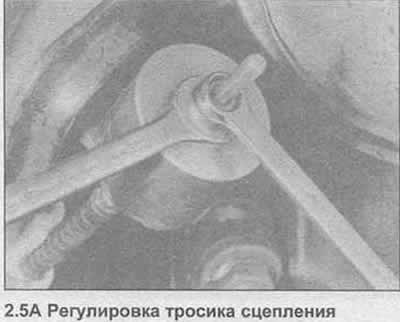
5. If adjustment is necessary, apply the handbrake, jack up the front of the car and secure it on axle stands. Loosen the lock nut at the end of the clutch cable (photo), turn the adjusting nut clockwise to increase the difference, or counterclockwise to decrease it. Tighten the lock nut, recheck the stroke. Lower the car to the ground.
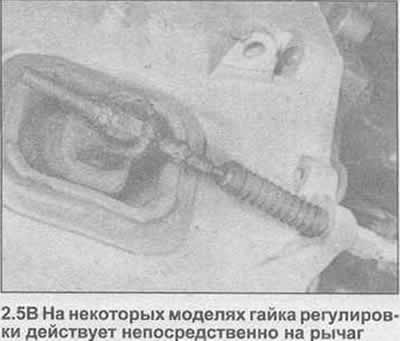
6. Note that when adjusted correctly, the clutch pedal will be slightly higher than the brake pedal. The adjustment is incorrect if both pedals are at the same height, and the clutch will likely not release completely.
7. When the clutch pads wear out, the initial position of the clutch pedal will gradually rise, so it is necessary to perform periodic adjustment at the specified frequency.
Visitor comments