


Contents: Ignition distributor sensor ⬇ Switch ⬇ Ignition coil ⬇ Spark plugs ⬇ Engine "C16NZ" ⬇ Distributor ⬇ Ignition coil ⬇ Spark plugs ⬇ Engines "16SV" and "18SE" ⬇ Ignition system of the engine "16SV" ⬇ Ignition distributor sensor ⬇ Electronic control unit ⬇ Vacuum sensor ⬇ Octane Corrector ⬇ Oil temperature sensor ⬇ Ignition coil ⬇ Spark plugs ⬇ Engine "18SE" ⬇ Tightening torques of main threaded…⬇ Tightening torques of main threaded…⬇
The engine ignition system is battery-powered, contactless, with a nominal voltage of 12 V. It includes a distributor sensor with a built-in electronic control pulse sensor (Hall sensor), an ignition coil, a switch, spark plugs and high-voltage wires.
Ignition distributor sensor
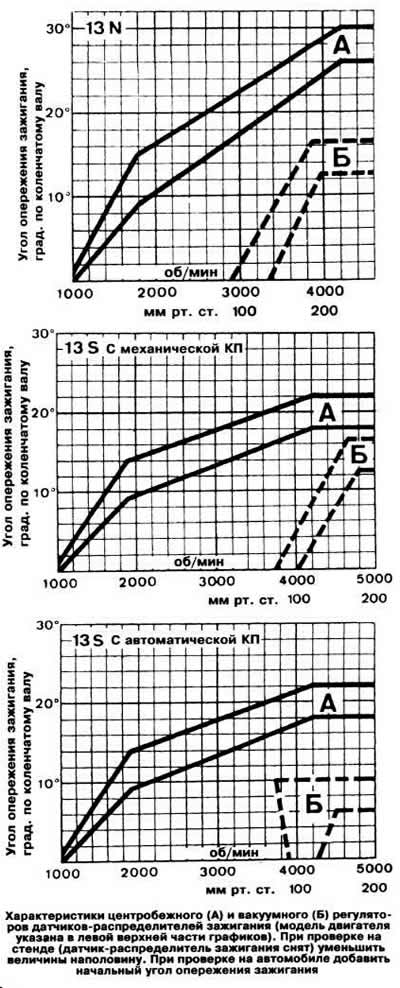
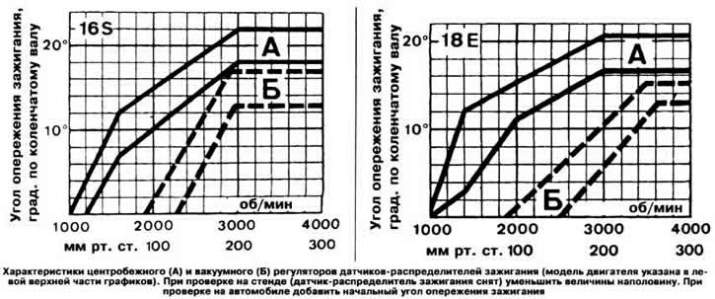
Ignition distributor sensor Bosch type JHFU4 (engines "14NV", "16S", "18E") or Delco ("13N", "13S") shielded, four-spark. with vacuum and centrifugal ignition timing regulators, with high-voltage current distributor, with axial terminals, with built-in microelectronic sensor (generator) control pulses with a change in the phase angle of the resulting voltage. It is driven by the camshaft eccentric. The direction of rotation is left.
Resistance of the distributor rotor, Ohm: 1000.
Part number of ignition distributor sensor:
- "13N": 1 103 478;
- "13S": 1 103 623 (cars with manual transmission) or 1,103,628 (cars with automatic transmission);
- "14NV": 0 237 009 073;
- "16S": 0 237 021 021;
- "18E": 0 237 021 025.
Initial ignition advance angle before TDC:
- engine "14NV": 5° ±2°;
- other engines: 10°.
Resistance of high-voltage wires, kOhm: <20.
Switch
The switch converts the control pulses of the generator sensor into current pulses in the primary winding of the ignition coil. It has a seven-plug connector (plug No.7 is a reserve).
Ignition coil
Brand and catalog number:
- engines "13N", "13S": Delco-Remy 3 474 221;
- engine "14NV", Bosch;
- engines "16S", "18E": Bosch type KW 12V, 1 227 020 009.
Primary winding resistance, Ohm:
- engines "13N", "13S": 0,3-0,6;
- engine "14NV": 0.72-0.88;
- engines "16S", "18E": 0.6-0.9.
Secondary winding resistance, kOhm:
- engine "14NV": 4.5-7.0.
- engines "16S", "18E": 6.9-9.3.
Secondary circuit voltage, kV:
- engines "13N", "13S": 16-20;
- engines "16S", "18E": 16-18.
Spark plugs
Brand and type:
- engines "13N", "13S", "16S", "18E": AC Delco R 42 XLS, Bosch WRD or DC M 14x125 Opel 12 14 702;
- engine "14NV": AC CR 42 CXLS.
Gap between electrodes, mm: 0.7-0.8.
Engine "C16NZ"
The engine ignition system is fully electronic. The ignition timing is controlled by the electronic control unit of the injection system. The system includes an ignition distributor, a speed and crankshaft position sensor, an ignition coil, spark plugs and high-voltage wires. The ignition distributor only distributes high-voltage current to the plugs. The ignition timing is not adjustable.
Distributor
Brand and catalog number: Bosch 0 237 521 015.
Ignition advance angle to TDC at idle speed: 10°.
Ignition coil
Like a conventional ignition coil, the coil of a fully electronic ignition system is a transformer that converts the low voltage of the primary circuit into the high voltage of the secondary circuit required to break down the spark gap between the spark plug electrodes and ignite the engine's working mixture.
Brand and catalog N°: AC Delco 90 240 252.
Primary winding resistance at 20°C, Ohm: 0.3-0.65.
Secondary winding resistance at 20°C, kOhm; 7,2-8,2.
Spark plugs
Brand and type: Bosch WR 7DC.
Thread of the screw-in part: M 14x1.25.
Gap between electrodes, mm: 0.7-0.8.
Engines "16SV" and "18SE"
The engine ignition system is battery-powered and fully electronic. The ignition timing is controlled by the microprocessor of the electronic control unit, which selects the optimal value from the 256 ignition timing values (16x16) stored in its memory device, depending on the crankshaft speed, load, and engine coolant temperature. Values intermediate to those recorded in the memory are calculated by linear interpolation.
Ignition system of the engine "16SV"
The ignition system of the engine "16SV" type MZV. Consists of an electronic control unit (ECU), ignition distributor sensor, vacuum sensor, octane corrector, coolant temperature sensor, ignition coil, initial ignition timing shoe, spark plugs and high-voltage wires.
Ignition distributor sensor
The signal coming from the Hall sensor built into the distributor sensor informs the ECU about the crankshaft speed. At a speed of over 6000 rpm, the ignition system is switched off.
Brand and catalog number: Bosch 0 237 521 016.
Electronic control unit
Based on the input data, the ignition ECU selects from memory the optimal ignition advance angle value, which can be in the range from 5 to 55° before TDC.
Vacuum sensor
A vacuum sensor installed on the intake manifold provides an engine load signal.
Octane Corrector
The engine can operate on both leaded petrol with an octane rating of 98 and unleaded petrol with an octane rating of 95. Adaptation of the ignition system to the octane rating of the fuel used is achieved by changing the position of the movable octane corrector connector.
Oil temperature sensor
The oil temperature sensor has a negative temperature coefficient, i.e. its resistance drops as the temperature rises, and it sends a voltage signal to the ECU depending on the change in oil temperature in the range from -35 to +130°C.
Ignition coil
Brand and catalog number: Delco-Remy 3 474 227.
Primary winding resistance, 0m: 0.72-0.88.
Secondary winding resistance, kOhm: 4.5-7.0.
Initial ignition timing adjustment block
The signal from the block informs the ECU about the value of the initial ignition advance angle.
Spark plugs
Brand and type: AC Deko CR 42 CXLS.
Gap between electrodes, mm: 0.7.
Engine "18SE"
The ignition system of the engine "18SE" type EZ61. It differs from the ignition system of the engine "16SV" in the following:
- the ignition timing is controlled by the ECU and the switch;
- The ECU determines the rotation speed and angular position of the crankshaft based on signals from a sensor installed in the cylinder block opposite the toothed ring made on the first counterweight of the crankshaft;
- at forced idle, the ECU receives a corresponding signal from the throttle position sensor, and the ignition timing is adjusted only depending on the crankshaft speed;
- the initial ignition timing adjustment block has been excluded from the system, since such an installation is not required.
Tightening torques of main threaded connections, kgf·m
Cylinder head mounting bolt:
- engines "13N", "13S": 1st reception: 2.5; 2nd and 3rd steps: turn 60° each time; Step 4: Turn 30° further; 5th step: turn it 30° after the engine has warmed up;
- engines "16S", "18E": 1st reception: 2.5; 2nd-4th steps: turn each time by 60°; 5th reception1): turn 30° more after the engine has warmed up;
- engines "14NV", "16SV", "C16NZ": 1st reception: 2.5; 2nd and 3rd steps: turn 60° each time; Step 4: Turn 30° further; Step 5: Turn it 30-50° more after the engine has warmed up;
- engines "18SE", "20NE", "C20NE", "20SEH": 1st reception: 2.5; 2nd 4th steps: turn each time by 60°; Step 5: Turn 30° more after the engine has warmed up:
- engine "20XE": 1st reception: 2.5; 2nd 4th steps: turn each time by 65°; Step 5: Turn it 30-45° more after the engine has warmed up.
Cylinder head cover fastening bolt (engine "20XE"): 0.8.
Camshaft timing pulley mounting bolt:
- engine "20XE": 1st reception: 5.0; 2nd step: turn further by 60-75°;
- other engines: 4.5.
Camshaft housing mounting bolt:
- engines "13N", "13S": 1st reception: 5.5; 2nd step: turn it 40° more after the engine has warmed up;
- engines "16S", "16SV", "C16NZ", "18E", "18SE", "20NE", "C20NE", "20SEH": 5,0.
1) Since 1987.
Tightening torques of main threaded connections, kgf.m
Nut for stud fastening of camshaft bearing housings (engine "20XE"): M6: 1.0; M8: 2.0.
Bolt for fastening the toothed pulley and crankshaft pulley:
- engines "13N", "13S", "14NV": 5,5;
- engines "16S", "16SV", "C16NZ", "18E", "18SE": 6.0. Crankshaft pulley mounting bolt:
- engines "20NE", "C20NE", "20SEH": 1st reception: 13.0; 2nd step: turn it by 40-50°;
- engine "20XE": 1st step: 25.0, 2nd step: turn further by 40-50°.
Crankshaft toothed pulley mounting bolt (engines "20NE", "C20NE", "20SEH", "20XE", 2.0.
Bolt for fastening the tension roller and shoe of the camshaft drive belt (engine "20XE"): 1st step: 2.5; 2nd step, turn it by 45-60°.
Main bearing cap mounting bolt:
- engines "13N", "13S", "16S", "18E": 7.0;2)
- engines "14NV", "16SV", "C16NZ": 1st reception: 5.0; 2nd step: turn further by 45-60°;
- engines "18SE", "20NE", "C20NE", "20SEH", "20XE": 1st reception: 6,0; 2nd step: turn further by 40-50°.
Connecting rod cap bolt nut:
- engines "13N", "13S": 2,5 (2,8) 3);
- engines "16S", "18E": 5.0 (1st reception: 3.5; 2nd step: turn it 45°);
- engines "14NV", "16SV", "C16NZ": 1st reception: 2.5; 2nd step: turn further by 30-45°;
- engines "20NE", "C20NE", "20SEH", "20XE": 1st reception: 3.5; 2nd step: turn further by 45°.
Flywheel mounting bolt:
- engines "13N", "13S", "16S", "18E": 6.0 4);
- engines "14NV", "16SV", "C16NZ": 1st reception: 3.5; 2nd reception; 30-45;
- engines "18SE", "20NE", "C20NE", "20SEH", "20XE": 1st reception: 6,5; 2nd step: turn further by 30-45° 5).
Water pump mounting bolt to engine block
- engines "13N", "13S": 0,8;
- other engines: 2.5.
Thermostat housing mounting bolt:
- engines "14NV", "16SV", "C16NZ": 1,0;
- engines "20NE", "C20NE", "20SEH", "20XE", 1.5.
Oil pump mounting bolt to engine block: 0.6.
Oil pan mounting bolt:
- engine "20XE": 0.6;
- other engines: 0.5.
Oil pressure warning light sensor: 3.0.
Oil drain plug: 4.5.
Nuts for the intake manifold and exhaust manifold mounting studs:
- engines "13N", "13S", "20XE": 2.0:
- other engines: 2.2.
Muffler inlet pipe mounting bolt: 2.5.
Spark plugs: 2.0.
1) since 1987.
2) since 1989 tightening torque for engines "13N", "13S" equals 6.2 kgf·m, for engines "16S", "18E" - 6.5 kgf·m.
3) Values in brackets are from 1987.
4) since 1987 on engines "16S", "18E" tightening is done in two stages 1st stage: 5.0; 2nd step: turn further by 25-35°.
5) The use of old bolts is not permitted.
Visitor comments