


The ECU stores information about all detected faults in the self-diagnostic system memory until it is erased.
When the ignition is turned on, the injection system malfunction indicator lamp lights up and goes out as soon as the engine starts running. If the lamp does not go out or lights up when the engine is running, this indicates that a malfunction has been detected in the ECU.
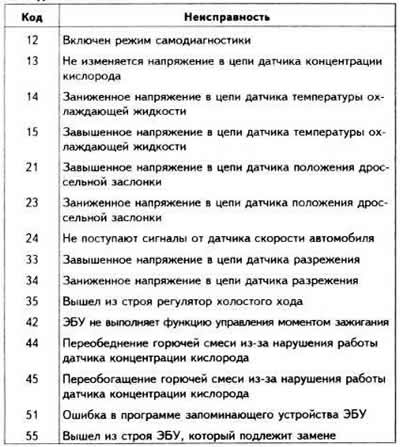
A precise determination of the fault is possible by connecting the diagnostic device KM-640 from General Motors to the diagnostic socket in the engine compartment. Each fault corresponds to a two-digit light code consisting of a certain number of flashes of the fault indicator lamp. First, the flashes corresponding to the first digit are read (for example, digit 1 - one flash, digit 2 - two flashes, etc.), then there is a short pause; next, flashes are read, indicating the second digit, then a long pause, indicating the end of the code.
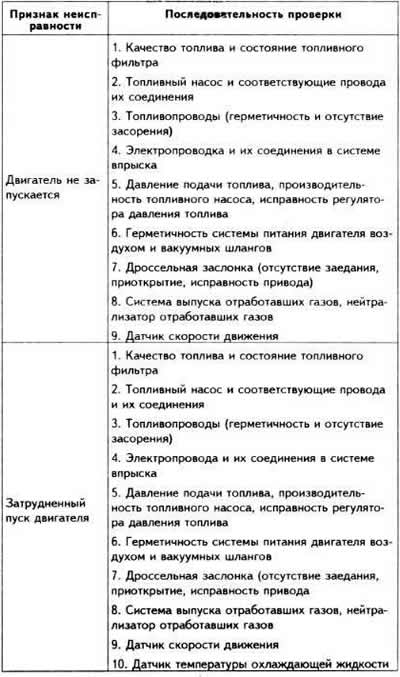
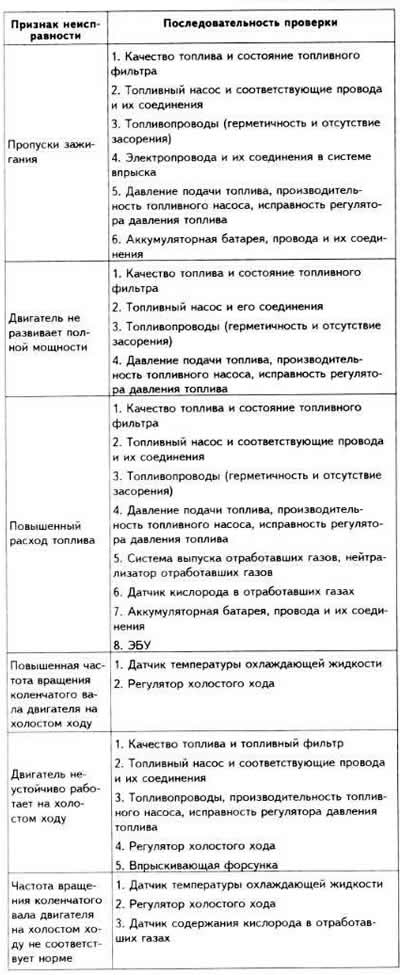
Set the instrument switch to position "B", turn on the ignition. The control lamp shows the code "12", indicating the start of self-diagnosis. Then the fault code recorded by the ECU is displayed, after which the transition to the next fault code occurs if several faults are detected simultaneously. After all the recorded fault codes are displayed, the fault display cycle is repeated twice. As the fault codes are displayed, it is necessary to write down and then determine the fault according to the table below.
(Material published on the website: www.OPELBOOK.ru)
To erase the fault codes from the ECU memory, turn off the ignition and disconnect the wire from the negative terminal of the battery for at least 1 minute. In this case, please note that the memory of other electronic devices of the car, such as the radio, may be erased.
Visitor comments