


Contents: Valve lift start moment ⬇ Valve lift moment ⬇ Valve clearance compensation ⬇ Operation of hydraulic tappets at…⬇
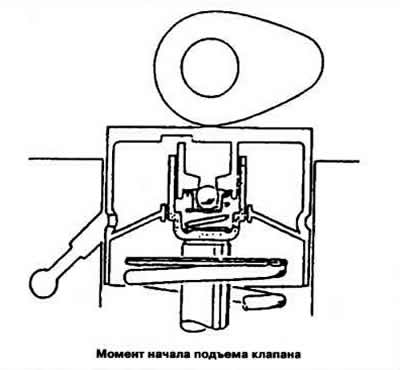
Valve lift start moment
When the camshaft cam hits the end of the tappet, the check valve closes the chamber and the pressure in it increases. The increase in pressure does not lead to compression of the volume occupied by oil in the high-pressure chamber. The tappet thus works as a solid body.
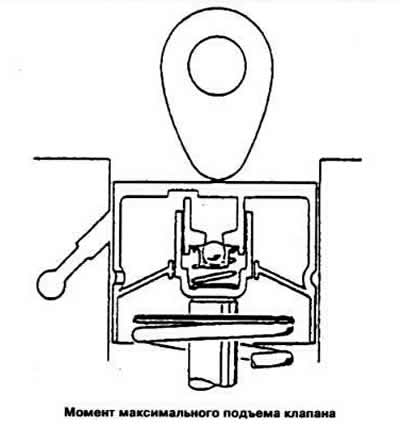
Valve lift moment
The camshaft cam presses forcefully on the tappet, which leads to a significant increase in pressure in the tappet cavity. A small amount of oil is ejected through the gaps between the cylinder and the plunger, which leads to compression of the hydraulic tappet by a maximum of 0.10 mm. Such compression is structurally necessary for running in the tappets even with a decrease in the distance between the camshaft cam and the tappet end.
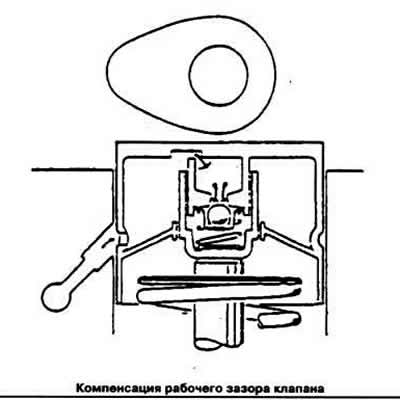
Valve clearance compensation
The camshaft cam does not press on the tappet, and the pressure in the high-pressure chamber drops. The spring separates the plunger and the cylinder, thereby compensating for the gap between the cam and the end of the valve stem.
At this point, the check valve opens, and some amount of oil enters the high-pressure chamber. This amount corresponds directly to the gap being compensated.
Note. Noisy operation of the valve mechanism drive after starting the engine is normal. This is due to the fact that when the engine is stopped, some oil flows out of the tappet cavity. When the engine starts, the high-pressure chamber is filled again and the noise stops. Filling of the high-pressure chamber continues until the engine warms up to operating temperature. The design of the cylinder head lubrication circuit prevents complete removal of oil from the channels after stopping the engine. This ensures that oil is supplied to the tappets immediately after starting the engine and the fastest possible cessation of noise in the valve mechanism drive.
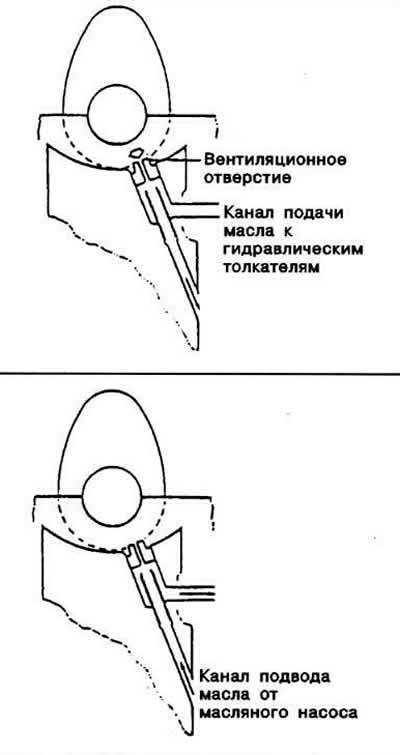
Operation of hydraulic tappets at the moment of engine start
After the engine is stopped, oil flows out of the channels coming from the oil pump, and the oil supply channels to the tappets remain filled with oil. To prevent air from entering the tappet cavity under the action of oil pressure when the engine is started, there are ventilation holes in the oil supply channels to the tappets, which provide automatic purging of the tappet cavity. In addition, the ventilation hole allows reducing the pressure of the oil entering the tappets.
Visitor comments