


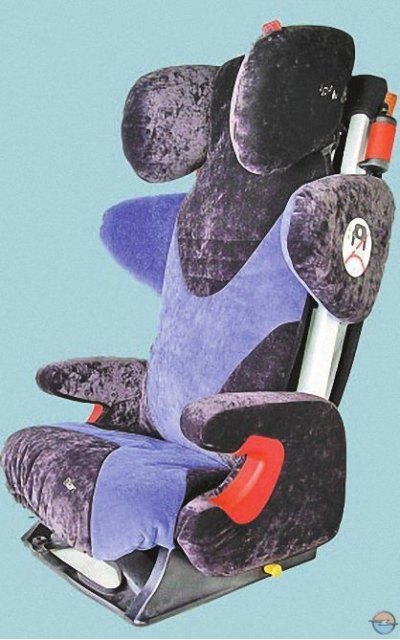
According to the requirements of the Road Traffic Regulations, children under 12 years of age must be transported in special child seats.
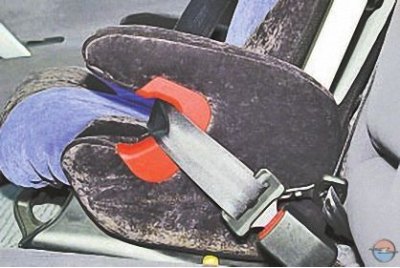
You can use the standard seat belts to secure child seats...
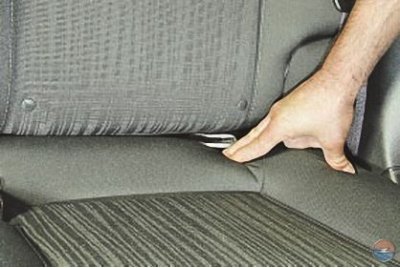
...in addition, the car is equipped with hinges between the cushion and the back of the rear seat on the left...
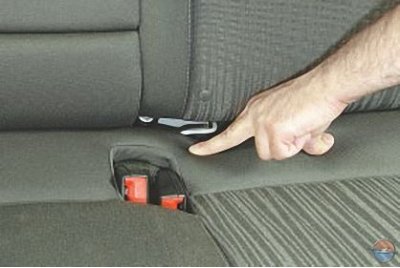
...and on the right side of the left side of the back (the locations of the loops are indicated by icons on the back), into which the connecting connectors of the lower fastenings of the child seat, which has its own ISOFIX type fastening elements, are inserted.
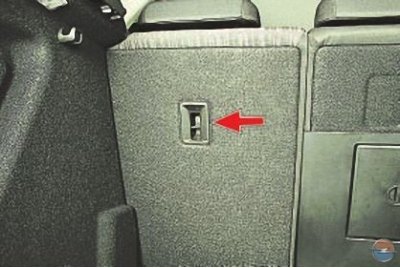
On the back of the rear seat there are loops for attaching the child seat with its own belt.
For information on the types of child seats and the locations in the vehicle where they can be installed, see Table 1.
Table 1. Permissibility of installing child seats depending on the weight category (weight, age) child
| Seat | 0 (up to 10 kg, approximately 0-9 months) | 0+ (up to 13 kg, approximately 0-18 months) | I (9-18 kg, approximately 9 months - 4 years) | II (15-25 kg, approximately 3-6 years) | III (22-36 kg, approximately 6-12 years) |
| baby cot | child seat | extra pillow | |||
| Front passenger seat | +* | +* | +** | +** | +** |
| Back seat | + | + | + | + | + |
Legend:
"+*" – the location is suitable for installing a seat provided that the front passenger airbag is deactivated;
"+" – the place is suitable for installing a seat;
"+**" – the place is suitable for installing a seat, but it is recommended to transport children using appropriate devices in the back seat.
Categories 0 and 0+ (up to 13 kg)
The neck of a two-year-old child is very fragile. Transport children in basket-type seats installed against the direction of travel. This position ensures maximum safety for the child.
Category I (9–18 kg)
For transporting children from 2 to 4 years old, use a wrap-around seat that allows you to support the child with a special child seat belt or a special elastic cushion.
Category II (15–25 kg) and III (22–36 kg)
For children under 12 years of age, use a booster seat with belt guides that allow the seat belt to slide across the child's hips without twisting.
Attention! Children may be transported in the front seat in a child seat only if the front passenger airbag is deactivated.
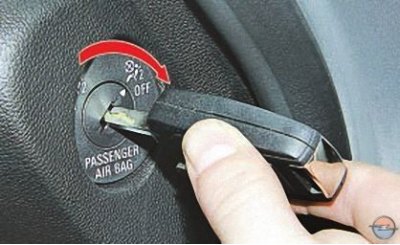
To turn off the airbag, open the right front door, insert the ignition key into the airbag switch slot located on the right end of the instrument panel, and turn the switch to the "OFF" position.
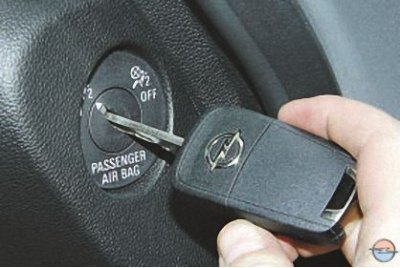
After removing the child seat, be sure to return the switch to the "ON" position. Never hold a child on your lap in a moving vehicle.
Visitor comments