


Contents: Visual inspection ⬇ Measurement procedure ⬇
Visual inspection
1. Check the crankshaft main bearings in the cylinder block for damage or deformation. The main bearings cannot be repaired if they are damaged, the cylinder block must be replaced with a new one.
2. Check all sealing and contact surfaces for damage, if necessary, repair the fault or replace the cylinder block with a new one.
3. Check all threaded parts and through holes for damage.
4. Check all bolts for damage. If any is found, replace the bolts with new ones.
5. Check the cylinder bores for cracks or damage. Cylinder liners are not serviced separately, so if a cylinder is damaged, the entire cylinder block must be replaced.
6. Check the cylinder block for cracks. Cracks cannot be repaired; if any are found, the cylinder block must be replaced with a new one.
Measurement procedure
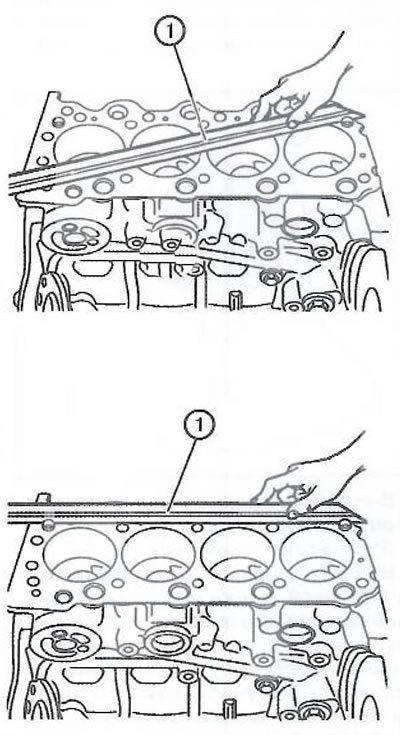
Checking the non-flatness of the cylinder block surfaces
Using a straight edge (1), check the cylinder block for flatness.
(The article was published on the website www.opelbook.ru)
Cylinder bores and crankshaft main bearing seats
1. Install the crankshaft main bearing bed and tighten the mounting bolts.
Note: Use old mounting bolts for testing.
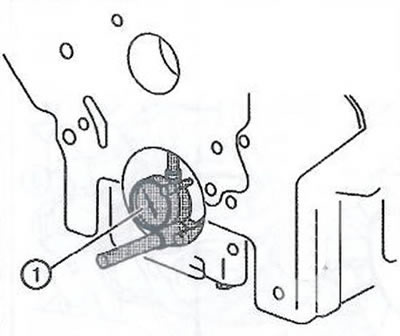
2. Using the EN-8087 dial indicator (1), measure the main bearing bores. If the bore diameters are not within the standard, replace the cylinder block with a new one.
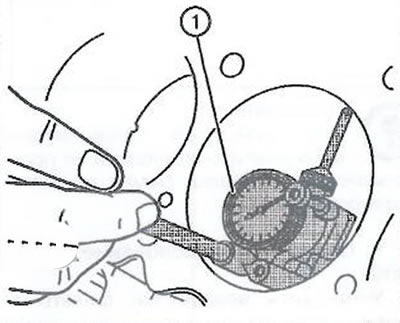
3. Using the EN-8087 dial indicator (1), check the cylinder bores. Determine:
- Wear.
- Taper.
- Ovality.
- Stepwise wear.
Note: All values are given in the "Service Data and Specification" section at the end of the chapter.
4. If the cylinder bores are not within the norm, replace the cylinder block with a new one.
5. Remove the crankshaft main bearing bed.
Visitor comments