


Sequence of execution
1. Place the vehicle on an inspection ditch or overpass (see "Preparing the car for maintenance and repair"),
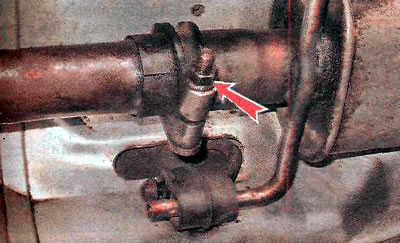
2. Using a metal brush, clean the clamp of the intermediate muffler from dirt and loose rust and treat it with penetrating lubricant.
3. Use a 13 mm wrench to loosen the clamp.
Note: The clamp is welded to the muffler at the top.
4. Using a metal brush, clean the nuts securing the intake pipe and the oxygen concentration sensor from dirt and loose rust and treat them with penetrating lubricant (shown on the example of a car produced after 2000).
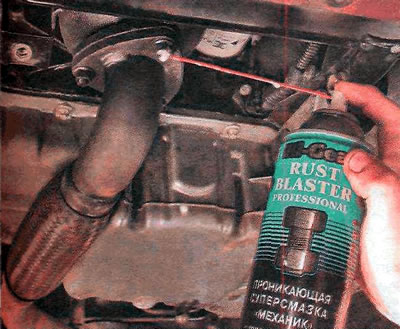
5. Remove the oxygen concentration sensor installed in the intake pipe (see "Oxygen Concentration Sensors - Replacement").
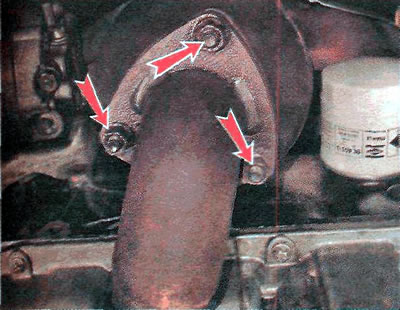
6. On cars produced after 2000, use a 14 mm socket wrench to unscrew the three nuts securing the exhaust pipe to the catalytic converter...
...on cars produced before 2000, unscrew one nut and three bolts securing the inlet pipe to the exhaust manifold.
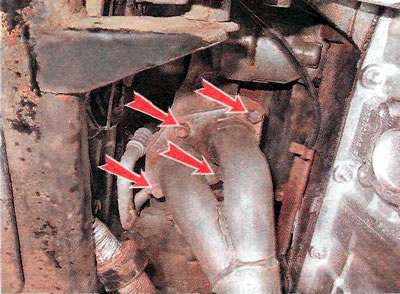
Warning: After unscrewing the fasteners, it is necessary to support the front part of the exhaust pipe.
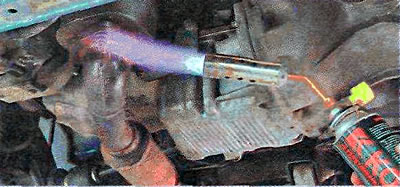
Recommendation: To make it easier to loosen the nuts securing the exhaust pipe, you can heat them up with a gas burner, observing fire safety precautions (see "Safety precautions when servicing and repairing a car").
7. Remove the gasket between the exhaust pipe and the catalytic converter on cars produced after 2000...
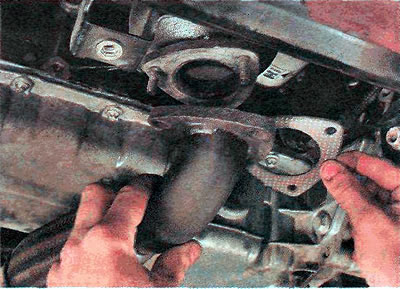
...or on cars manufactured before 2000.
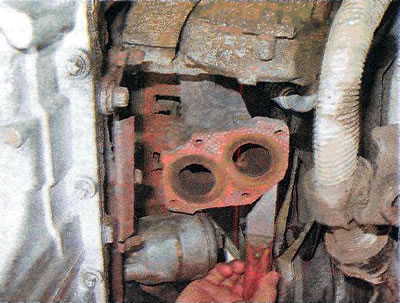
When assembling, it must be replaced with a new one.
8. Remove the intake pipe by disconnecting it from the intermediate muffler (shown on a vehicle produced after 2000).
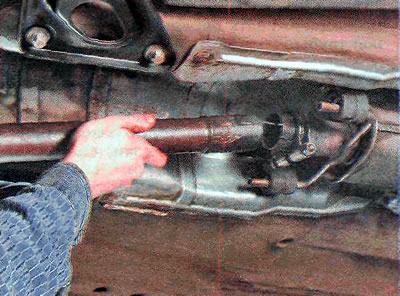
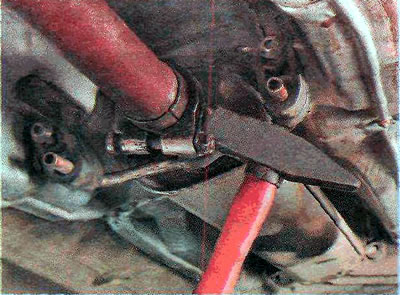
Recommendation: To facilitate the separation of the muffler pipes, apply several blows with a hammer around the circumference of the clamp and along the pipe connection.
9. Install the parts in reverse order.
Visitor comments