


...or on the bracket at the rear of the cylinder block near the crankshaft pulley under the timing belt tension roller.
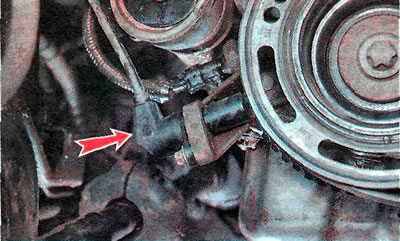
The ECU determines the crankshaft speed and position using the signals from this sensor. The crankshaft position sensor is the only one whose malfunction prevents the engine from operating, in which case the engine management system malfunction indicator lamp lights up on the instrument panel.
Camshaft Position Sensor installed on the cylinder head under the upper timing belt cover (in the photo the top cover is removed).
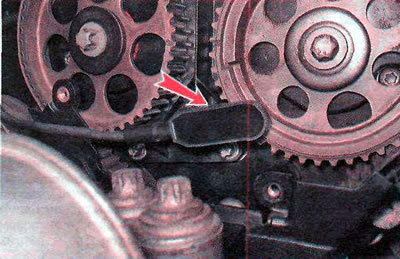
Using signals from this sensor, the ECU monitors the position of the exhaust camshaft to synchronize the opening of the fuel injectors in accordance with the working strokes in the engine cylinders. If the camshaft position sensor is faulty, the ECU switches to a backup (emergency) operating program. In this case, the engine management system malfunction indicator lamp lights up on the instrument panel.
Knock sensor installed on the engine cylinder block near the intake manifold support bracket.
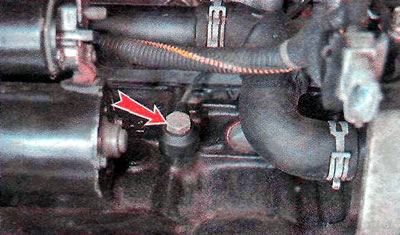
Based on the signals from the knock sensor, the ECU adjusts the ignition timing, keeping it at the detonation threshold, which is the most optimal for engine operation. If the knock sensor is faulty, the ECU switches to the backup program, and the engine management system malfunction indicator lamp lights up on the instrument panel. In this case, detonation may occur (sharp metallic knocks in the engine when the load increases sharply), which is extremely harmful to the engine. Therefore, you should move slowly to the repair site, without sudden acceleration.
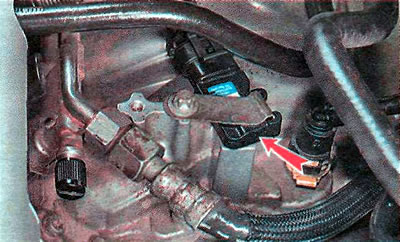
Absolute pressure sensor for 1.4 and 1.6 DOHC engines installed on the intake receiver.
Information taken from the website [OPELBOOK.ru]
Based on the absolute pressure sensor signals, the ECU determines the vacuum value in the intake manifold, which indirectly indicates the engine load. Based on these readings, the ECU adjusts the fuel-air mixture proportions in accordance with the engine operating mode. If the sensor malfunctions, the ECU switches to the backup operating program and the engine management system malfunction indicator lamp lights up on the instrument panel.
Temperature sensor of the air entering the cylinders of engines 1.4 and 1.6 DOHC located in the air supply pipe.
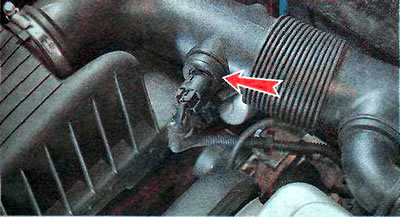
The purpose of the sensor is similar to the purpose of the coolant temperature sensor. If the temperature sensor of the air entering the cylinders fails, the ECU switches to the backup operating program, and the engine management system malfunction indicator lamp lights up on the instrument panel. This makes it difficult to start the engine, especially at low ambient temperatures.
1.8 DOHC Engine Mass Air Flow Sensor installed in the air supply pipe of the throttle assembly.
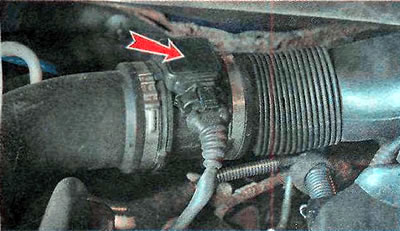
The sensor informs the ECU about the amount and temperature of incoming air. In accordance with these readings, the ECU adjusts the proportions of the fuel-air mixture in accordance with the engine operating mode. If the sensor fails, the ECU switches to a backup operating program and the engine management system malfunction indicator lamp lights up on the instrument panel.
Oxygen concentration sensors. Depending on the engine model and year of manufacture of the vehicle, two oxygen sensors may be installed: one (control) on the exhaust manifold (before the catalyst)...
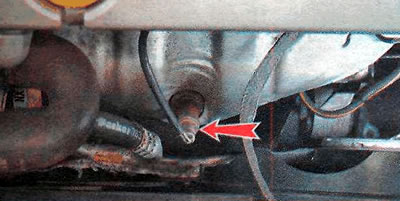
...second (diagnostic) - on the intake pipe (after catalyst)...
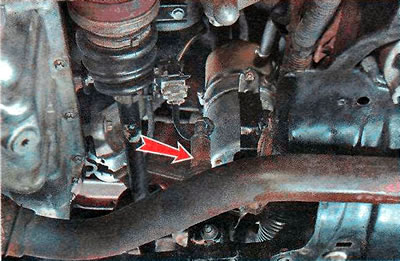
...or one (control) - on the intake pipe (before the catalyst).
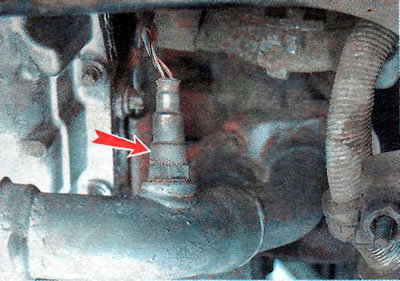
Based on the signals from the control sensor, the ECU adjusts the fuel-air mixture for optimal operation of the catalytic converter, and based on the signals from the diagnostic sensor, it monitors its efficiency. If the oxygen concentration sensors fail, the ECU switches to a backup program, and the engine management system malfunction indicator lamp lights up on the instrument panel.
Coolant temperature sensor installed in the cylinder head near the thermostat cover (1.4 and 1.6 DOHC engines)...
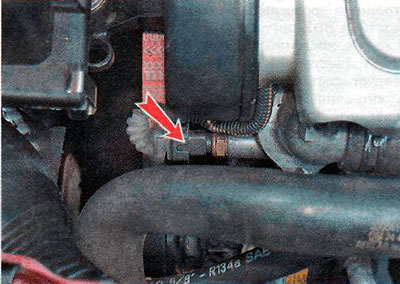
...or in the thermostat housing (1.8 DOHC engine).
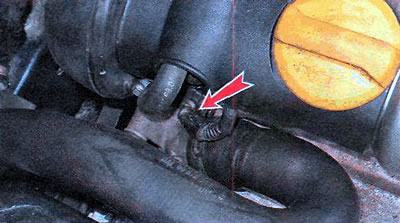
The sensor informs the ECU about the coolant temperature, which is necessary for the correct adjustment of the fuel-air mixture and ignition timing, especially when starting the engine. If the coolant temperature sensor is faulty, the ECU switches to a backup operating program, and the engine management system malfunction indicator lamp lights up on the instrument panel. This may make it difficult to start the engine, especially after a long period of inactivity.
Throttle Position Sensor installed on the throttle assembly and is made as a single element with the idle speed regulator and the throttle assembly itself (the air supply pipe has been removed).
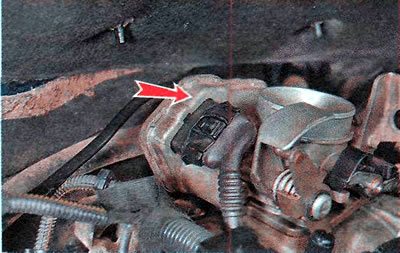
A similar sensor is also present on throttle assemblies with a cable drive of the throttle valve. Depending on the engine model and year of manufacture of the car, a fully electronic throttle assembly may be installed (see below). Based on the sensor signals, the ECU determines the position of the throttle valve, which indirectly indicates the engine load. Depending on the sensor readings, the ECU adjusts the composition of the air-fuel mixture in accordance with the position of the throttle valve and determines the moment the engine switches to idle mode. If the sensor is faulty, the engine management system malfunction indicator lamp lights up on the instrument panel.
Vehicle speed sensor installed in the gearbox housing of vehicles not equipped with ABS.
The sensor informs the ECU about the current speed of the car. If the sensor is faulty, the ECU switches to the backup program, the speedometer does not work and the engine management system malfunction indicator lamp lights up on the instrument panel.
On vehicles equipped with ABS, the speed signal comes from the ABS control unit.
Visitor comments