


Spark plugs
Proper spark plug operation is essential for efficient engine operation.
Replacement
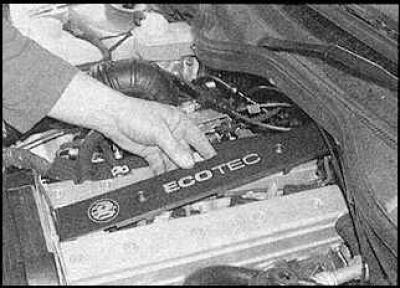
1. Remove the mounting screws and remove the valve cover. Disconnect the cables and hoses that interfere with access to the spark plugs.
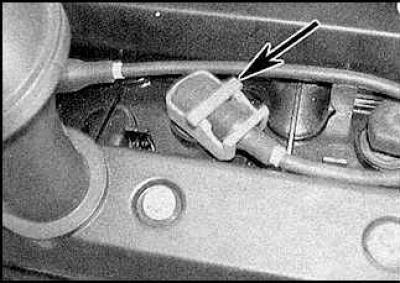
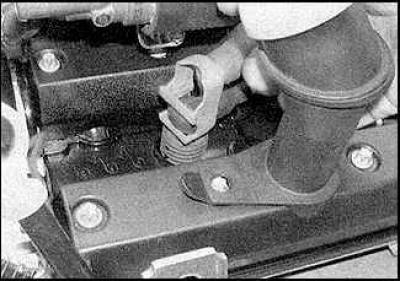
2. Mark the high voltage wires and disconnect them using a special tool (indicated by the arrow), if necessary.
3. Clean the area around the spark plugs and remove the spark plugs.
4. The condition of your spark plugs can provide valuable information about the health of your engine.
5. If the spark plug tip is clean and white, without deposits, then the fuel mixture is too lean.
6. If the tip of the spark plug is covered with black deposits, the fuel mixture is too rich.
7. If the tip of the spark plug is covered with light brown or gray deposits, the fuel mixture is adjusted correctly and the engine is most likely in good condition.
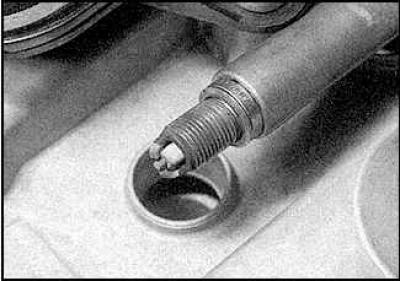
8. The spark gap of multi-electrode spark plugs cannot be adjusted.
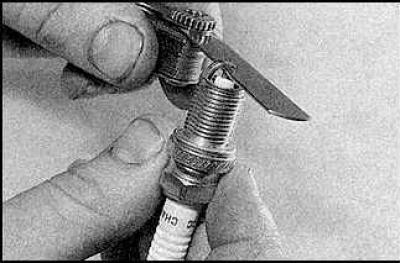
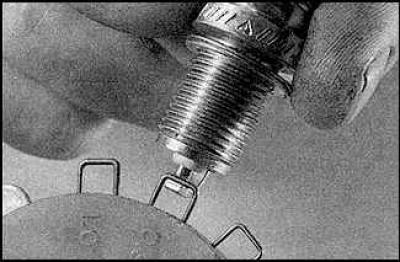
9. Measure the spark plug gap using a set of feeler gauges (drawing on the right) or a special tool (drawing on the left).
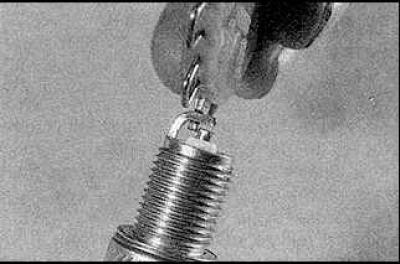
10. Adjust the spark gap by bending the tip.
11. Reinstall the spark plugs. To make installing the spark plugs easier, slide a short piece of tubing over the spark plug. This will act as a universal joint and prevent damage to the threads.
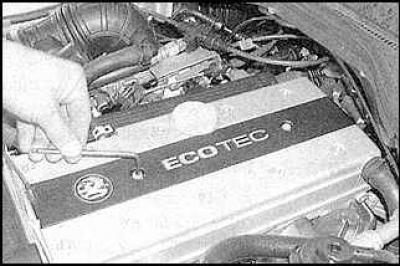
12. Tighten the spark plugs to the specified torque and reconnect the wires. Replace the cover.
Fuel filter - replacement
On all models, the fuel filter is located near the fuel tank.
1. Release pressure from the fuel system.
2. Raise the rear of the vehicle and support it on stands.
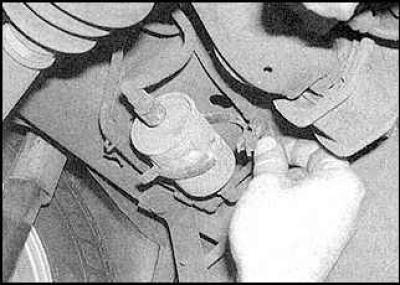
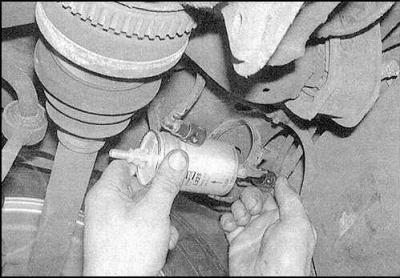
3. Release the retaining clip, disconnect the fuel lines and remove the filter.
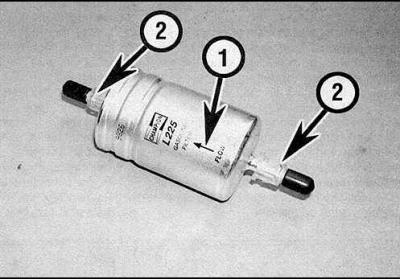
4. Install a new filter. When installing, check that the arrow (1) points in the direction of fuel flow. Check that the fasteners (2) are installed correctly.
Timing Belt - Replacement
Look subsection 3.3.7 and subsection 3.2.7.
Visitor comments