


1. When approaching the parking space, check for any oil or operating fluid leaks under the vehicle. If possible, fix the leak before leaving.
2. Walk around the vehicle. Check the following:
- completeness of removable parts (windshield wipers, exterior mirrors, etc.);
- integrity of the body glass, headlight and taillight lenses. Do not delay replacing broken lenses. Replace cracked body glass as soon as possible;
- condition of the tires. Radial tires have soft sidewalls, so tires with nominal internal pressure look deflated. Remember their appearance (sinking). Check the air pressure in the tires at least once a month and, if necessary, bring it to the recommended pressure for this type of tires. A difference in pressure values within 0.2-0.3 kgf/cm² can worsen the handling parameters, smoothness of the car and lead to unwanted skidding or understeer when braking. Due to low tire pressure, the tread wears out faster and more fuel is consumed;
- presence and condition of license plates.
Attention! Headlights, sidelights, taillights and license plates must be clean.
Material copied from this resource www.OPELBOOK.ru
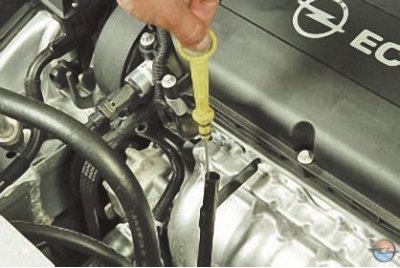
3. Check the oil level in the engine crankcase and top it up to normal if necessary.
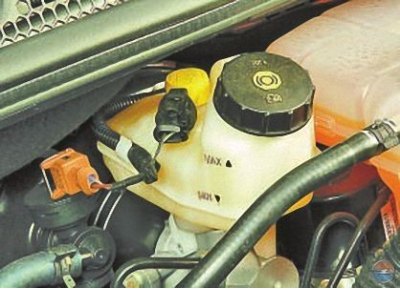
4. Check the brake fluid level in the brake system hydraulic drive reservoir and clutch release...
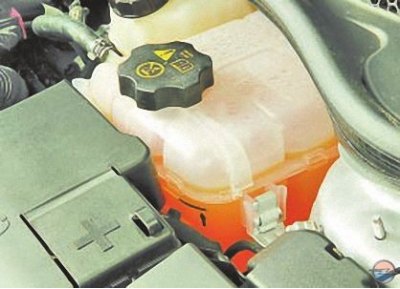
5. …and the coolant level in the expansion tank. If necessary, top up the liquid to the norm.
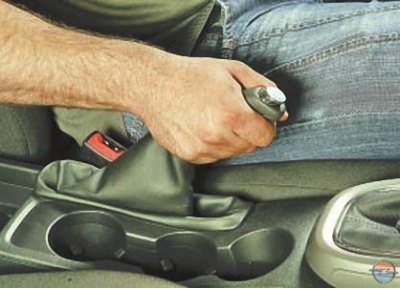
6. Check the operation of the parking brake. To do this, lift the lever to the stop and count the number of clicks. If there are more than 8 clicks, the parking brake needs to be adjusted.
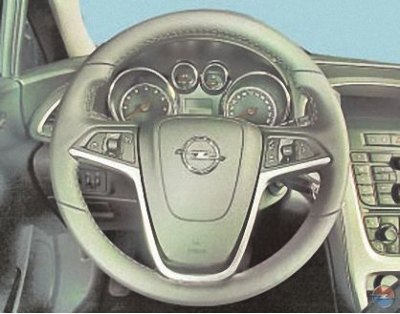
7. Check the sound signal for proper operation.
8. Check the operation of the headlights, taillights, additional brake light and direction indicators. Replace faulty bulbs (see Replacing lamps).
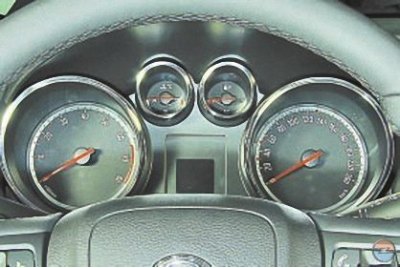
9. Check the operation of control and measuring instruments.
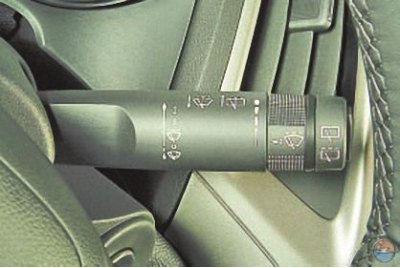
10. Check the operation of the windshield wipers and washers…
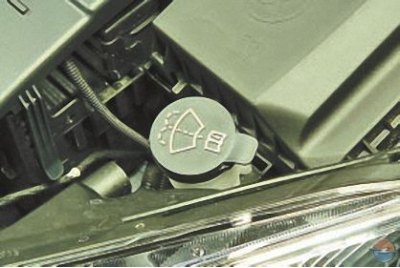
11. …the fluid level in the washer reservoir. If necessary, add fluid to the reservoir.
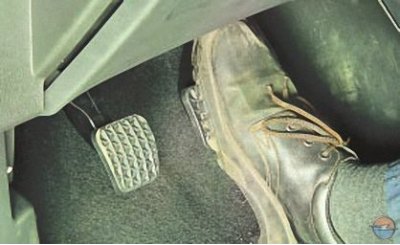
12. Before driving, be sure to check the operation of the brake system on a stationary vehicle by pressing the brake pedal.
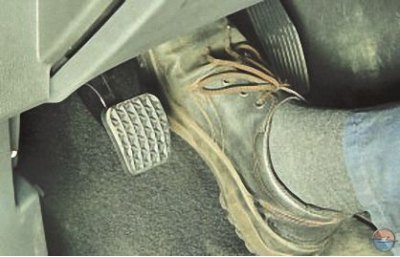
13. If the pedal "falls" to the floor without resistance, then the brake system is faulty. Operation of such a vehicle is prohibited.
Note: Before a long trip and after a long break in operation, check the condition of the spare tire, equip the car with tools and accessories.
If a malfunction is detected, make a decision (taking into account the requirements of the Traffic Regulations) about the start of a trip or car repairs.
All checks are described in detail in the Daily Maintenance subsection.
Visitor comments